
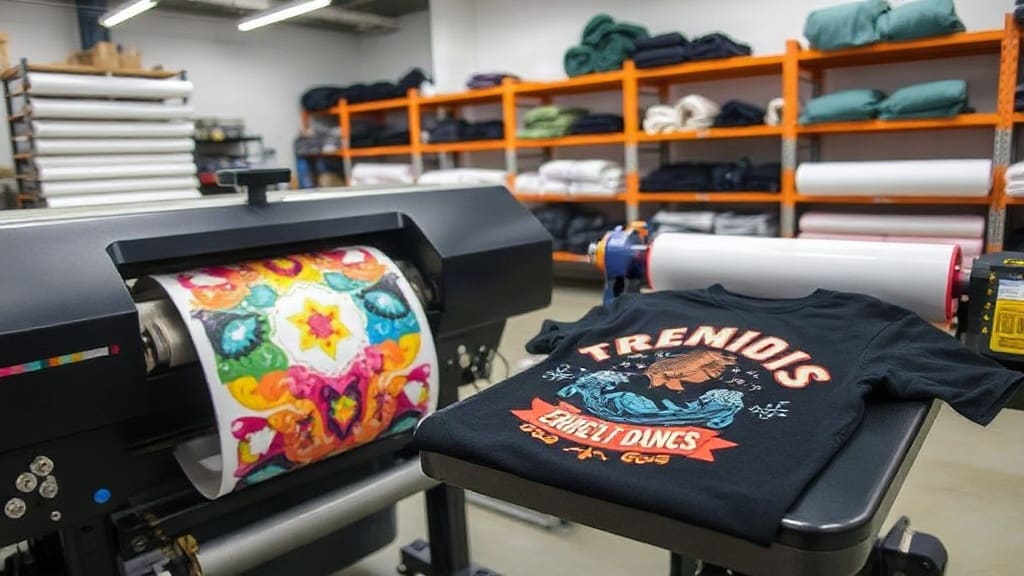
Are you searching for DTF printing solutions to create custom t-shirts, hoodies, or tote bags? If you've typed "DTF transfers near me" into your browser, you're likely exploring the world of Direct to Film printing. This exciting technology has revolutionized the custom apparel industry, offering vibrant, durable, and soft-to-the-touch prints that rival traditional screen printing. But finding the right local provider can be tricky. In this comprehensive guide, we'll walk you through everything you need to know about DTF transfers, how to locate the best services in your area, and how to ensure your projects turn out perfect every time.
What Are DTF Transfers?
Direct to Film printing, commonly known as DTF, is a method where a design is printed onto a special PET film using a specialized printer. After printing, an adhesive powder is applied to the film, and then it's cured. The result is a transfer that can be applied to almost any fabric using a heat press. Unlike traditional heat transfer vinyl, DTF transfers work exceptionally well on cotton, polyester, blends, and even challenging materials like nylon.
The beauty of DTF is its versatility. You can produce full-color designs with gradients, photographic effects, and intricate details that are difficult to achieve with other methods. The prints are stretchable and wash-resistant, making them ideal for activewear, workwear, and everyday apparel.
Why Search for DTF Transfers Near Me?
While there are many online DTF printing services, looking for a local provider offers several benefits. First, you can save on shipping costs and time. If you need transfers quickly for an event or a last-minute order, a local shop can often deliver within a day or two. Second, you can physically inspect the quality of their prints before committing. You can see the color vibrancy, feel the texture, and even test a sample on your own garments. Third, local businesses often provide personalized customer service and can offer guidance on design optimization, film choice, and heat press settings.
Moreover, supporting local businesses strengthens your community and allows for easier communication if any issues arise. When you search for "DTF transfers near me," you're taking a smart approach to ensure quality and convenience.
How to Find the Best DTF Transfer Services Locally
Finding the right local DTF provider requires more than just a quick Google search. Here are some practical steps to narrow down your options:
1. Start with Search Engines and Maps
Use search engines with the keyword "DTF transfers near me" and review the top results. Pay attention to local businesses with strong reviews and ratings. Google Maps can also show you nearby print shops that offer DTF services. Look for businesses that have been around for a while and have a professional website or social media presence.
2. Check Their Portfolio and Samples
A reputable provider will showcase their work. Look for galleries of past projects, customer testimonials, and before-and-after photos. If possible, visit their store or request a sample pack. Many local shops offer free or low-cost samples so you can evaluate the print quality, feel, and durability.
3. Ask About Their Equipment and Supplies
Inquire about the type of DTF printer and film they use. High-quality equipment often results in better color accuracy and longevity. Ask if they use genuine DTF inks and powders. Some shops might use converted printers or cheaper materials that could compromise the final product.
4. Evaluate Their Customer Service
Excellent customer service is a sign of a reliable business. Call them, ask questions, and see how responsive and helpful they are. A good provider will guide you through the process, offer design advice, and be transparent about pricing and turnaround times.
5. Compare Pricing
Don't automatically choose the cheapest option. DTF transfers vary in price based on size, complexity, and quantity. Get quotes from several local shops and compare them. Remember that very low prices might indicate lower quality materials or rushed work. Look for fair pricing that reflects the value you're receiving.
What to Look for in a DTF Transfer Provider
Once you have a list of potential providers, evaluate them based on these criteria:
- Quality of Materials: Do they use high-quality PET film, DTF inks, and adhesive powder? This affects the durability and feel of the transfer.
- Color Accuracy: Can they reproduce your brand colors accurately? Ask for a color match test.
- Turnaround Time: How quickly can they deliver your order? If you have deadlines, ensure they can meet them.
- Minimum Order Quantities: Some providers have MOQs, which might be too high if you only need a few transfers. Find one that suits your needs.
- Design Assistance: Do they offer file preparation or design services? This is helpful if you're not tech-savvy.
- Reviews and Reputation: Read online reviews on Google, Yelp, or Facebook. Look for consistent positive feedback.
Comparing DTF Transfers with Other Methods
DTF is not the only option for custom apparel. It's helpful to understand how it compares to other methods so you can make an informed decision.
DTF vs. Screen Printing
Screen printing is ideal for large orders with simple, solid-color designs. It offers excellent color opacity and durability. However, set-up costs are high, making it uneconomical for small batches. DTF, on the other hand, has no set-up costs and is perfect for short runs, multi-color designs, and even one-off pieces.
DTF vs. Heat Transfer Vinyl (HTV)
HTV is great for single-color logos and text. It requires weeding (removing excess vinyl), which can be time-consuming for intricate designs. DTF eliminates weeding because the design is printed directly onto the film. DTF also handles gradients and photographs much better than HTV.
DTF vs. Direct-to-Garment (DTG)
DTG prints directly onto the fabric, giving a soft feel and excellent detail. However, DTG works best on 100% cotton and can be slower for bulk orders. DTF offers more versatility in terms of fabric types and is faster for production runs, especially when you pre-print transfers and apply them later.
How to Use DTF Transfers Effectively
Getting the best results from your DTF transfers depends not only on the provider but also on how you apply them. Here are some essential tips:
1. Proper Heat Press Settings
Temperature and pressure are crucial. Most DTF transfers require a temperature of around 300-320°F (150-160°C) with medium to firm pressure. The pressing time is typically 10-15 seconds. However, always follow the specific instructions provided by your transfer manufacturer. Using a heat press is recommended over a home iron for consistent pressure and coverage.
2. Pre-Press Your Garments
Before applying the transfer, pre-press your garment for a few seconds to remove moisture and wrinkles. This ensures better adhesion and prevents the transfer from shifting.
3. Cold Peel or Hot Peel?
Some DTF transfers require a hot peel (peel immediately after pressing), while others need to cool down first. Check the supplier's instructions. Generally, hot peel is faster, but cold peel can result in sharper edges.
4. Test on Scrap Fabric
Always test a small sample on a similar fabric before applying to your final garment. This helps you adjust settings and avoid costly mistakes.
5. Wash Care
Advise your customers to wash garments inside out in cold water and tumble dry on low heat. This extends the life of the print.
Cost Considerations for DTF Transfers
Pricing for DTF transfers varies widely. Factors that affect cost include:
- Size of the transfer: Larger prints use more film and ink.
- Color complexity: Full-color or multi-color designs cost more than simple one-color prints.
- Quantity: Bulk orders usually come with discounts.
- Provider overhead: Local shops may have higher prices than online-only services due to rent and utilities.
On average, a single 8x10 inch DTF transfer might cost between $3 and $8, but prices can drop significantly with volume. It's always a good idea to request a quote and compare.
Common Mistakes to Avoid When Ordering DTF Transfers
Even with a great provider, things can go wrong if you're not careful. Here are some pitfalls to avoid:
- Not Providing High-Resolution Files: Always use vector files (like AI, EPS, SVG) or high-resolution PNGs (at least 300 DPI) to ensure crisp prints.
- Ignoring Color Management: Calibrate your monitor and use the correct color profile. What you see on your screen might not match the final output.
- Forgetting to Mirror the Design: DTF transfers are applied face down, so your design must be mirrored before printing. Most providers handle this, but if you're doing it yourself, double-check.
- Overlooking Artwork Guidelines: Each provider may have specific requirements for file formats, bleed, and color modes. Read their guidelines carefully.
- Skipping a Proof: Always ask for a digital proof before the final print. This helps catch errors in spelling, colors, and layout.
Top Questions to Ask Before Placing an Order
To ensure a smooth experience, ask your local DTF provider these questions:
- What is your turnaround time?
- Do you offer rush services?
- What file formats do you accept?
- Do you provide a color proof?
- What are your minimum order quantities?
- Can I request a physical sample?
- What is your return or reprint policy?
Frequently Asked Questions
How long do DTF transfers last?
When applied correctly and cared for properly, DTF transfers can last for many washes. They are designed to withstand stretching and washing without cracking or fading. Typically, you can expect 50+ washes without significant degradation if you use quality materials and follow care instructions.
Can DTF transfers be used on dark fabrics?
Yes, DTF transfers work exceptionally well on dark fabrics. Unlike DTG, which often requires a white underbase on dark garments, DTF prints the design with a white layer that provides opacity. This means the colors remain vibrant even on black or navy clothing.
What is the difference between DTF and sublimation?
Sublimation printing requires polyester fabrics or special coated surfaces because the ink turns into gas and bonds with polymer molecules. It doesn't work on 100% cotton. DTF, on the other hand, can print on a wide range of fabrics, including cotton, polyester, and blends. DTF also produces a physical layer on the fabric, while sublimation becomes part of the garment.
How do I store DTF transfers?
Store DTF transfers in a cool, dry place away from direct sunlight and heat. They should be kept flat or rolled, but avoid creasing. Excessive humidity can affect the adhesive powder, so keep them sealed in a plastic bag or container until ready to use.
Can I apply DTF transfers without a heat press?
While it's possible to use a household iron, it's not recommended. A heat press provides consistent pressure and temperature, which are essential for proper adhesion. If you must use an iron, use firm pressure and a parchment paper barrier, but results may be less durable.
Final Thoughts on Finding DTF Transfers Near You
Finding a reliable local provider for DTF transfers can be a game-changer for your custom apparel projects. You get the convenience of quick turnaround, personalized service, and the ability to see and feel the product before committing. By following the tips in this guide, you can confidently choose a provider that meets your needs and ensures your designs come to life beautifully. Remember, the key is to prioritize quality over price and to establish a good working relationship with your printer. So start your search for "DTF transfers near me" today, and unlock the full potential of this amazing printing technology.